

7 Signs Your Property May Need a Roof Replacement
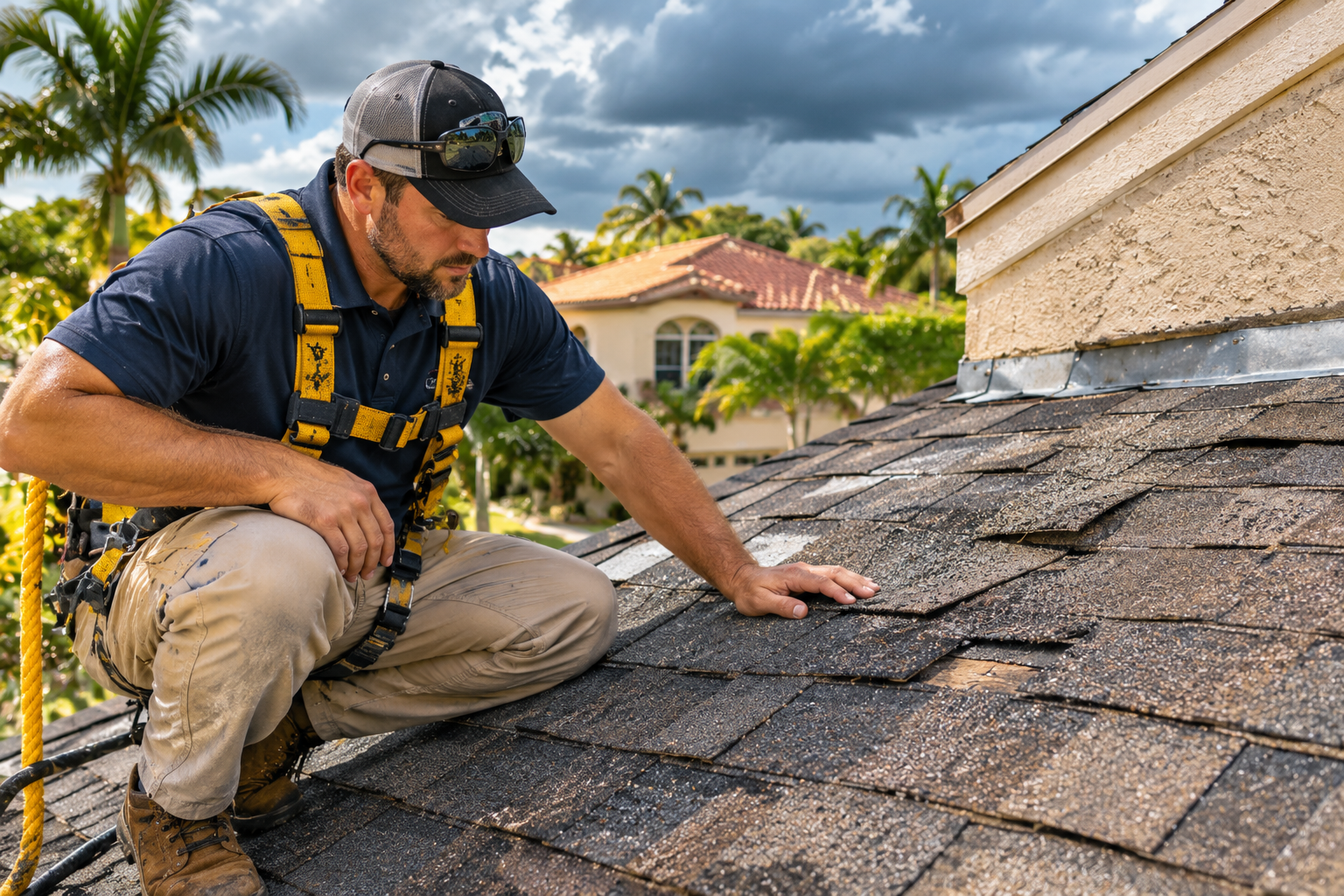
Roofs along Florida’s southeast coast take a beating most of the country never sees. Months of hurricane season, relentless sun, salty ocean breezes, and sudden afternoon downpours all wear roofing materials down faster than in cooler, drier places. If you are wondering whether your roof has a few good years left or whether it is time to replace it, knowing the warning signs can save you from a much bigger problem.
Quick Answer
Seven common signs your roof may need replacing are curling or cracked shingles, heavy granule loss, leaks that keep coming back after repairs, interior water stains, sagging or soft spots, daylight showing through the attic, and a roof at or past its expected lifespan. In Hollywood, FL, storm damage is a common eighth sign. Not every problem calls for a full replacement, so a professional inspection is the best way to know for sure.
What Hollywood Property Owners Should Know
The key thing to know is that South Florida roofs age faster than the national averages suggest, and much of the damage is hard to see from the ground. Keep these points in mind.
- Intense sun, salt air, strong storms, and high humidity all speed up roof wear compared to milder climates.
- Many older homes and buildings across Broward County have roofs that are near or past their expected lifespan.
- Broward County sits in Florida’s High-Velocity Hurricane Zone, which carries some of the state’s strictest building code requirements for roofing.
- Many Florida insurers look closely at a roof’s age and condition when writing or renewing a policy.
- Not every sign of wear means the whole roof has failed. Some problems are repairable, and a qualified contractor can tell you which path makes sense.
Why Roof Condition Matters in Hollywood
Roof condition matters here because local properties sit squarely in the path of Atlantic storms and face punishing weather year-round. Hurricane season runs from June through November, and the rainy season brings frequent heavy downpours from late spring into fall. Strong sun and salty coastal air break down roofing materials faster than many owners expect, especially near the beach and along the Intracoastal Waterway.
The age of local housing adds to the risk. Many homes in neighborhoods like Hollywood Hills, Emerald Hills, and Driftwood, along with nearby Dania Beach and Hallandale Beach, were built decades ago, so a large share of roofs are at or near the end of their service life. When an aging roof meets a storm season, the chance of leaks, structural damage, and expensive interior repairs climbs sharply.
Global Roofing Spec Inc. provides roof inspections, repairs, and installations for homeowners and commercial property owners in Hollywood and across Broward County. We know how local weather and building stock affect roofs, and we give owners honest assessments of whether repair or replacement is the right move.
Local Data and Field Observations
This section reflects general professional observation and common industry practice, not verified statistics. Roofers across South Florida commonly see asphalt shingle roofs wear out sooner than manufacturer estimates, which are typically based on milder climates. Metal and tile roofs tend to hold up better in hot, humid, coastal conditions, though proper installation and ventilation matter for every material.
How a Failing Roof Affects Local Properties
A failing roof causes more than drips. Moisture that gets into attic insulation makes it less effective and drives up cooling costs. Hidden leaks can lead to mold behind walls and in the attic, creating health concerns and repair bills that reach far beyond the roof.
For landlords and property managers, a roof problem can disrupt tenants, create liability, and lower property value. Commercial owners face similar risks, including damage to inventory, equipment, and the building itself. Replacing a roof once repair no longer makes sense helps stop those costs from piling up.
7 Signs Your Roof May Need Replacement
The clearest signs are visible wear on the shingles, recurring leaks, interior water damage, structural sagging, and simple old age. Here is what to watch for.
1. Curling, cracking, or buckling shingles. Shingles that cup at the edges or lift at the corners are badly weathered and no longer seal the roof properly.
2. Heavy granule loss. If your gutters collect lots of gritty granules or you see bare patches on shingles, the material is nearing the end of its useful life.
3. Leaks that keep coming back. A roof that keeps leaking after professional repairs, or springs leaks in new places, likely has widespread deterioration that patches cannot fix.
4. Water stains on ceilings or walls. Interior staining means water is getting through. The leak may not be directly above the stain, since water often travels before it shows.
5. Sagging or soft spots. An uneven roofline or spongy areas on the roof deck can point to damaged decking underneath.
6. Daylight in the attic. If you can see light through the roof boards, water and air can get in through the same gaps.
7. A roof at or past its expected lifespan. Even a roof that looks fine from the street may be seriously worn after many years of South Florida weather.
Storm damage is a common bonus sign. After a named storm or severe weather, missing shingles, bent flashing, or impact damage from debris may not be visible from the ground, so a professional check is worth scheduling.
When to Call a Professional
Call a roofing professional if you notice any of these signs, or if your roof is aging and you are unsure how much life it has left. After a storm, it is reasonable to check gutters for granules, look for missing shingles from the ground, and check your attic for signs of water.
Do not climb onto a steep, wet, or damaged roof. Rainy-season conditions and hidden storm damage make that especially risky. A qualified contractor can safely assess the entire system, tell you whether repairs will do the job, and lay out your options clearly.
Common Local Causes of Roof Damage
The most common causes of early roof failure in South Florida are sun and heat, storms and wind, salt air, poor installation or ventilation, and skipped maintenance.
Sun and heat. The sun’s intensity this far south breaks down the binders in asphalt shingles faster than in northern states, leading to brittleness, cracks, and granule loss.
Storms and wind. Tropical systems, afternoon thunderstorms, and hurricanes can lift shingles, loosen flashing, and open paths for water, even on roofs that are not especially old.
Salt air. Near the beach and the Intracoastal, salty air corrodes metal components like flashing, fasteners, and gutters, weakening the roof’s watertight seal.
Poor installation or ventilation. Bad installation shortens roof life no matter how good the materials are. Poor attic ventilation traps heat and moisture, wearing the roof down from underneath.
Skipped maintenance. Small issues like lifted flashing, cracked sealant around vents, or a few damaged shingles can grow into failures that require full replacement instead of a simple fix.
Prevention and Maintenance
The best protection is a professional inspection before and after hurricane season, plus a few simple habits in between:
- Schedule an inspection in spring to fix problems before peak storm months, and another after the season ends to catch any damage.
- Keep gutters clear so water drains freely off the roof.
- Trim trees and palm fronds that hang over the roof to reduce scraping and debris buildup that holds moisture.
- If you notice granules collecting in gutters or downspouts, take a photo and mention it at your next inspection.
Avoid patching steep or questionable roof sections yourself. DIY sealants on a deteriorating roof can trap moisture or hide damage that keeps getting worse underneath.
What to Expect From a Professional Inspection
A professional inspection gives you an honest picture of your roof’s current condition and how much useful life it has left. If repair is the right answer, targeted work can fix specific problem areas and extend the roof’s life. If replacement makes more sense, a new roof installed with quality materials and proper technique gives your property fresh protection built for South Florida weather.
Results depend on materials, installation quality, ventilation, maintenance, and future weather. No contractor can promise an exact lifespan, but choosing the right material and installing it correctly gives your roof the best chance of lasting.
Common Mistakes Property Owners Make
The most common mistakes are waiting for a leak, underestimating missing shingles, patching an old roof over and over, and skipping post-storm checks.
Waiting for an active leak. By the time water drips inside, insulation, decking, and interior finishes may already be damaged. Routine inspections catch problems earlier, when fixes usually cost less.
Assuming a few missing shingles are minor. Sometimes they are. Other times, they signal a broader failure. A professional assessment tells you which, instead of leaving it to guesswork.
Repairing an old roof again and again. Patching an aging roof in this climate often turns into a cycle of growing repair bills. Eventually, the total cost of repairs outpaces the cost of replacement.
Skipping the post-storm inspection. Big storms can cause damage you cannot see from the ground. Skipping a check lets that damage grow until it becomes a much larger problem.
A Common Local Scenario
A typical case starts with a ceiling stain after heavy rain on a roof that looks fine from the street. This is a common scenario, not a specific project.
A homeowner in a Hollywood neighborhood built in the late 1980s notices a water stain on a second-floor bedroom ceiling after a summer storm. From the ground, the roof looks intact, with no obvious missing shingles.
An inspection finds heavy granule loss across much of the roof, exposing the shingle mat underneath, plus separated flashing around a roof vent. The flashing can be repaired, but given the roof’s age and overall wear, the contractor explains that replacement will offer better long-term value than a string of repairs. The homeowner replaces the roof before the next storm season.
How We Help With Roof Replacement
We provide professional roof inspections that give you an honest recommendation on whether repair or replacement makes sense. When replacement is the right call, we install residential and commercial roofing systems built for South Florida conditions, including asphalt shingle, metal, and tile options. Our team handles everything from tear-off and deck preparation through installation and final inspection.
[Request Your Roof Inspection]
Comparing Your Options
Repair works well for isolated problems on a roof with life left, while replacement makes sense for widespread or age-related wear. Here is how they compare.
| Factor | Professional Repair | Full Roof Replacement |
|---|---|---|
| Best for | Isolated damage or minor leaks on a roof with life left | Widespread wear, aging systems, recurring leaks, structural concerns |
| Upfront cost | Lower | Higher |
| Long-term outlook | Extends life when the roof is fundamentally sound | Resets the roof’s service life with new materials |
| Risk of repeat problems | Higher if wear is widespread | Lower with proper installation and maintenance |
| How to decide | Professional inspection | Professional inspection |
The right choice depends on your roof’s age, materials, and condition. Our goal at every inspection is to give you the information you need to decide with confidence.
Service Areas
We serve homeowners and commercial property owners in Hollywood, FL and throughout Broward County. If you are in a nearby community and want to confirm we cover your area, reach out and we will let you know.
Cost of Ignoring Roof Problems
A failing roof does not stay the same; it keeps getting worse, especially through storm season. Water that gets past a damaged roof can reach wall cavities, insulation, and framing, and the cost of fixing water damage, mold, and structural problems usually exceeds what a timely replacement would have cost.
For commercial owners, business disruption and damaged equipment or inventory add even more risk. Acting on early warning signs almost always gives you more options and a lower total cost.
[Protect Your Property Before the Next Storm Season]
FAQ
How do I know if my roof needs replacement or just repairs in Hollywood, FL?
A professional inspection is the most reliable way to decide. A contractor looks at the roof’s age, how widespread the wear is, how many problem areas exist, and whether the deck underneath is damaged. Some Hollywood roofs just need targeted repairs, while others have reached the point where ongoing repairs cost more than replacement.
How does South Florida’s climate affect roof lifespan?
Intense sun, high humidity, salty coastal air, and a long storm season all wear roofs down faster than milder climates do. That means roofs here can show serious wear earlier than the same materials would elsewhere, which makes regular inspections especially important.
What are the most common signs of roof wear in Broward County?
The most common signs are granules in the gutters, curling or cracked shingles, ceiling stains, leaks after rain, sagging, and daylight showing in the attic. Older homes across Broward County are especially likely to show these signs as their roofs age.
Is it safe to inspect my own roof?
You can safely look at your roof from the ground, check gutters for granules, and look for water signs inside the attic. Climbing onto a steep, wet, or damaged roof is not safe. A professional inspection gives you a complete picture without putting you at risk.
Can replacing my roof cut down on repair costs?
For roofs that are old or worn across large areas, yes. Repeatedly repairing a roof at the end of its life usually means growing bills without fixing the real problem. When replacement is the right call, it resets the roof’s life and ends that repair cycle.
What roofing materials work best in Hollywood, FL?
The best material balances heat, humidity, sun, and storm risk with your budget and property type. We install asphalt shingle, metal, and tile roofs, each with different performance, cost, and maintenance needs, and we help you choose what fits your property.
Should I get a roof inspection after a storm?
Yes. Storm damage like lifted flashing, loose shingles, or small punctures is often invisible from the ground but can still let water in. A post-storm inspection catches problems early, when repairs are usually simpler and less expensive.
Does roof age affect my homeowners insurance in Florida?
It often does. Many Florida insurers review a roof’s age and condition when writing or renewing a policy, and some ask for an inspection on older homes. Check with your insurance agent about your specific policy, and keep records of your roof’s installation date and any inspections.
What happens if I delay replacing a roof that needs it?
Delaying replacement raises the risk of leaks, interior damage, and structural problems. With storms and heavy rain never far off, a worn roof becomes more vulnerable each season. Acting early usually means fewer added costs down the road.
Do commercial properties face the same roofing risks?
Yes, and the stakes can be higher because of possible damage to equipment, inventory, and tenant spaces. Flat and low-slope commercial roofs also have their own common failure points, so regular professional inspections matter just as much for commercial owners as for homeowners.
Owning property here means your roof faces some of the toughest conditions in the country. Whether you are a homeowner watching an aging roof through storm season, a landlord managing rentals, or a business owner protecting a building and everything in it, knowing the warning signs lets you act before a small problem becomes a big one. With hurricane season wrapping up at the end of November, now is a smart time for a post-season check.
Get a Professional Roof Assessment for Your Hollywood Property
If your roof shows any of these signs, or you simply want to know where it stands before next storm season, a professional inspection is the right first step.
[Schedule Your Roof Inspection Today]